
51% of B2B software buyers now start their research with an AI chatbot rather than Google. And 69% say AI guidance led them to choose a different vendor than the one they had initially planned. That changes where your business needs to be understood, and what your sales team needs to do when a buyer gets in touch.
1. AI is shaping the shortlist before Sales knows there is a deal
G2’s The Answer Economy: 2026 AI Search Insight Report found that 51% of B2B software buyers start their research with an AI chatbot rather than Google. It also found that 71% use AI at some point in their buying journey, and that chatbots are the number one source influencing which vendors make the shortlist.
The G2 2026 Buyer Behavior Report adds an important qualification: 69% of buyers report that AI guidance led them to choose a different vendor than the one they had initially planned. This doesn’t mean 69% switched an existing supplier. It means AI influenced their choice in a software evaluation.
In other words, AI is not just helping buyers research a decision they have already made. It can change which businesses they consider. G2 also reports that 33% purchased from a vendor they had not previously heard of.
That creates a new first impression. A buyer may encounter your company in an AI-generated comparison before visiting your site, speaking to a colleague or contacting Sales. If you are missing from that answer, or described inaccurately, you may never know you were considered and ruled out.
2. AI nominates. Buyers verify.
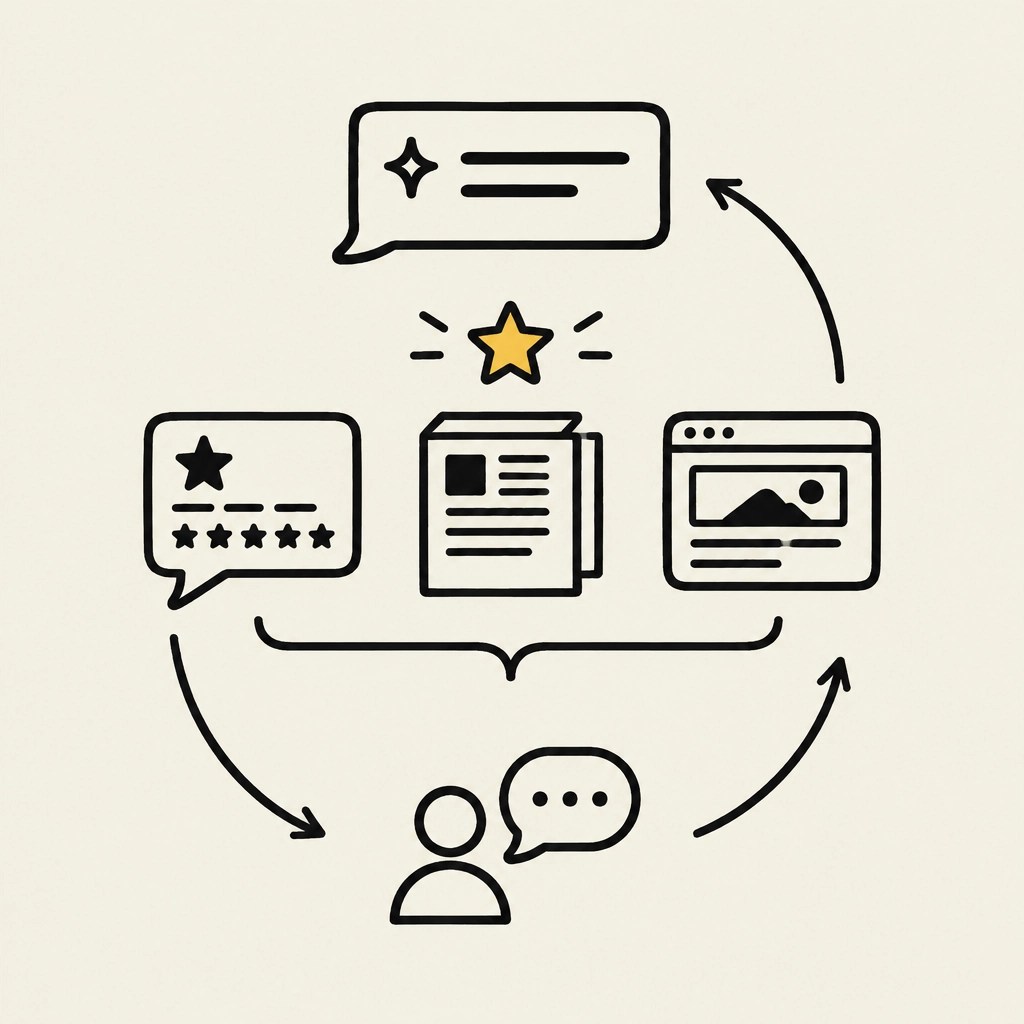
An AI recommendation is not the end of the buying process. It is a prompt for the buyer to check whether the recommendation holds up.
G2 reports that 71% of buyers visit a vendor’s website and 63% run a Google search after an AI recommendation. In its AI Search research, 92% of B2B professionals said AI had shaped their vendor shortlists, while 75% said they trust AI vendor suggestions. Yet citations from review sites were the most confidence-inspiring signal in an AI answer, named by 45% of buyers.
That pattern matters. AI can bring your company into the conversation, but buyers still look for evidence: what customers say, whether the product fits their situation and whether the company’s own explanation matches the recommendation.
A 2025 study of generative engine optimisation found that only 2.9% of AI citations pointed to a brand’s own domain, while over 75% pointed to third-party sources. Your website matters, but it is not the whole picture. Reviews and other credible sources can influence what AI says about you, and what a buyer thinks when they check.
Being named gets you into consideration. Credible evidence gives buyers a reason to keep you there.
3. A clear position makes you easier to recommend
AI systems need to work out what your company does, who it serves and when it is a relevant option. Buyers need the same clarity. If your website describes a “flexible platform for modern businesses” without making the category, customer or problem clear, neither has much to work with.
A 2026 Position Digital study of ChatGPT recommendations in B2B SaaS found that ambiguous or vague positioning lowers AI recommendation rates. The practical point is straightforward: models are more likely to recognise businesses that can be placed clearly in a category than those whose descriptions leave their purpose open to interpretation.
This is not a reason to write for machines instead of buyers. It is a reason to explain the business plainly. What category are you in? Which Perfect Customer do you serve? What urgent problem do you solve for them, and what makes your approach relevant?
That is the work of positioning. Messaging then expresses that position in language a specific buyer recognises. The difference between positioning vs messaging is useful here: positioning defines the place you intend to own in the market; messaging gives buyers a reason to care about it.
For SaaS leaders, that is central to a go-to-market strategy. If the team is debating what is GTM, start with the practical answer: it is the set of choices about who you sell to, why they buy and how you reach them. Your AI visibility is one consequence of those choices, not a separate trick to bolt on afterwards.
4. Make your story consistent beyond your own website
If AI answers draw heavily on information beyond your domain, your external presence is part of your go-to-market strategy too. Buyers, and the systems they use, need to find a coherent account of what you do across your website, review profiles, customer stories, partner pages and other credible sources.
Start with the sources you can influence. Make sure the category and customer problem on your review profiles match the way you describe the business on your site. Ask customers for detailed, honest reviews that explain what they needed, why they chose you and what changed. Keep company descriptions consistent across platforms; inconsistencies can make the business harder to understand.
Then look at where your buyers seek advice. That might include industry publications, specialist communities, partner ecosystems or comparison pages. This is not about manufacturing mentions or chasing a list of backlinks. It is about building a body of clear, credible evidence around the market you serve and the problem you solve.
When a sales pipeline is not converting, teams often reach first for more leads, more campaigns or more training. But if the business is hard to identify, or absent from the places where buyers verify recommendations, extra activity may simply carry the same unclear story further.
5. Change the sales conversation to match the buyer’s preparation
By the time a buyer speaks with a salesperson, they may already have an AI-generated summary of your company, a comparison with competitors and a list of questions. Treating that first meeting as an opportunity to deliver the standard product pitch misses what the buyer needs next.
Gartner reported on 20 May 2026 that 69% of B2B buyers turn to sales representatives to validate AI-generated insights. That is a specific job for Sales: understand what the buyer has read, correct what is inaccurate, provide context the AI cannot supply and connect the product to the buyer’s actual situation.
Ask what they have been comparing and what they still need to establish. If they arrive with a mistaken picture of your company, treat that as evidence: your message or external proof may not be clear enough. And if the buyer has done their homework, do not make them sit through a generic introduction to the category.
The AI may set the frame. The rep can confirm it, or lose the opportunity to a competitor who does.
6. Run this check this week
Open ChatGPT or Perplexity and ask: “What are the best [category] software vendors for [your Perfect Customer] that need to solve [specific problem]?”
Look at three things. Are you named? How does the answer describe your company? And does that description match the position you want to own?
Then run the same prompt with a second AI tool. Compare the answers, note which competitors appear and check the sources each answer cites. If your business is missing or described in broad, inaccurate terms, do not jump straight to an AI-optimisation project. First check whether your category, customer, problem and proof are clear wherever buyers are likely to find you.
If you are asking why SaaS companies miss revenue targets, this is one place to investigate. The cause may not be that your team is working too little. It may be that buyers cannot see a precise reason to choose you, and AI is repeating the same ambiguity.
Make your position easier to recognise
AI does not replace the fundamentals of a sound B2B sales strategy. It makes weak positioning harder to hide. Buyers still need a clear problem, a relevant solution and evidence they can trust; now, they may use AI to decide which vendors are worth checking.
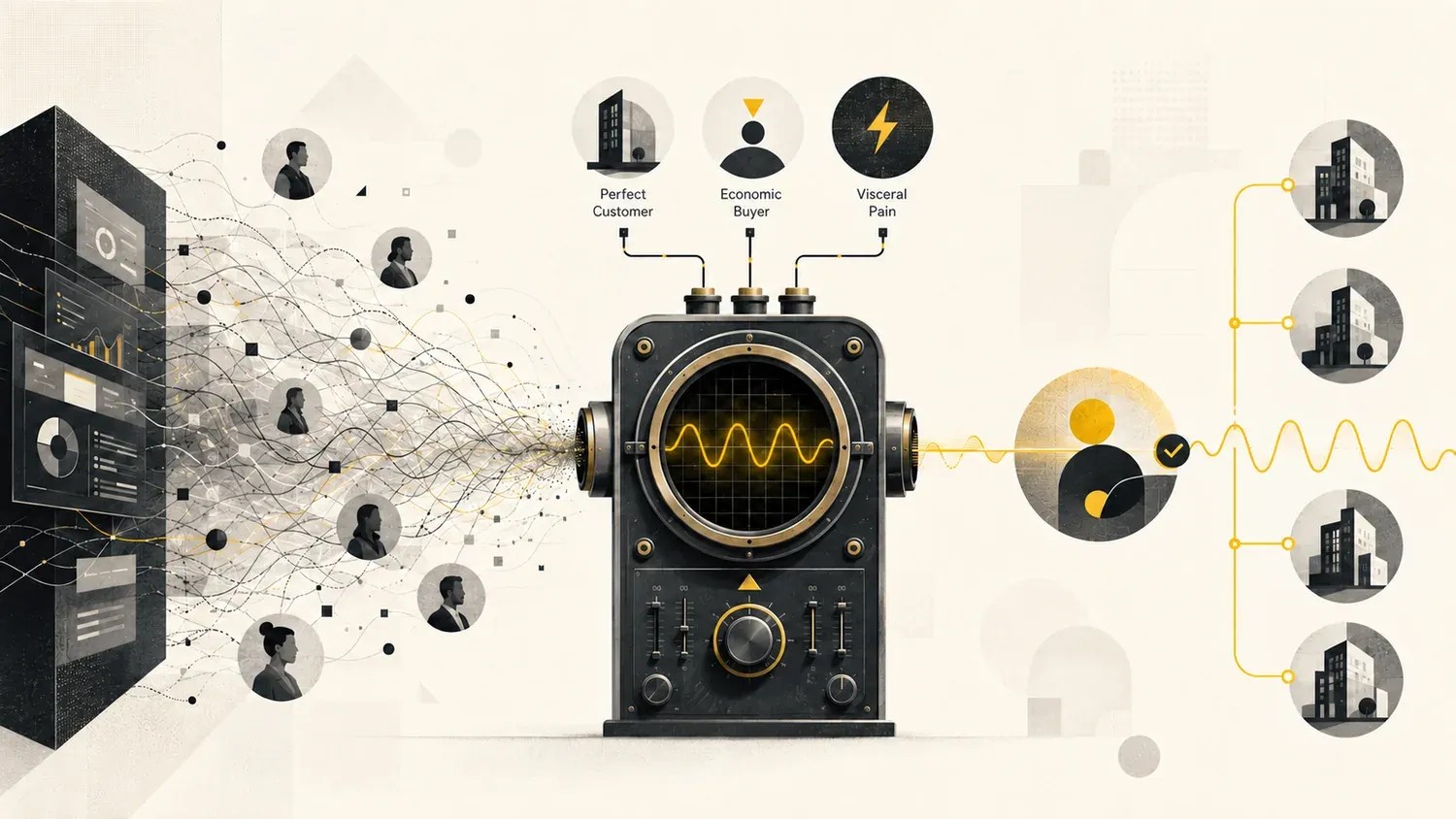
Start by getting precise about your Economic Buyer, Perfect Customer and Visceral Pains. Then make sure your website, reviews and sales conversations tell the same story. That gives buyers, and the systems helping them research, a clearer reason to understand when your business is the right choice.
To work through those choices for your own business, try the free Selling Software Algorithm Builder.
Missing your sales targets?
Tell us what’s not working and we’ll help you find out why.