
When sales are behind plan and nobody can quite explain why, the instinct is always to do more of everything: more outbound, more events, more SDRs, another push on the marketing. In my experience that rarely works, and the reason is usually that the problem sits upstream of the activity. A go-to-market strategy is the evidence-based choice of who buys, why they buy and how you reach and serve them repeatedly. It is not a list of launches, ads and sales hires. Answer those questions honestly and everything downstream gets easier; fudge them and you have found your first explanation for why SaaS companies miss revenue targets.
1. Strategy is a set of choices, not an activity list
Most B2B software companies have a go to market plan of sorts: publish content, attend events, hire SDRs, run ads and open new markets. There is nothing wrong with any of those in themselves, but they are activities, and activities do not explain why a particular buyer should choose you or why the same approach should work again next quarter.
A useful GTM strategy for SaaS makes a small number of connected choices instead. It says which customers the business will prioritise, what urgent problem it solves for them, how those customers actually make buying decisions and which GTM motion can reach them reliably, and each of those choices has to hold up against real customer evidence rather than internal optimism.
The distinction matters more than most teams expect. A plan tells the team what to do; a strategy tells them what to do, for whom, and why it is likely to work. Without that logic underneath, activity can rise steadily while sales stay exactly where they were, which is one of the most demoralising patterns in software.
When results fall short, ask ten people around your table “what is GTM actually meant to settle for us?” and you will usually get ten different answers, which is exactly where the trouble starts. The breakdown is nearly always one of three things: the business is pursuing the wrong customer, telling the wrong story, or using the wrong motion. These tend to overlap, too. A broad target makes messaging vague, vague messaging makes sales conversations harder, and a mismatched motion adds friction on top of it all.
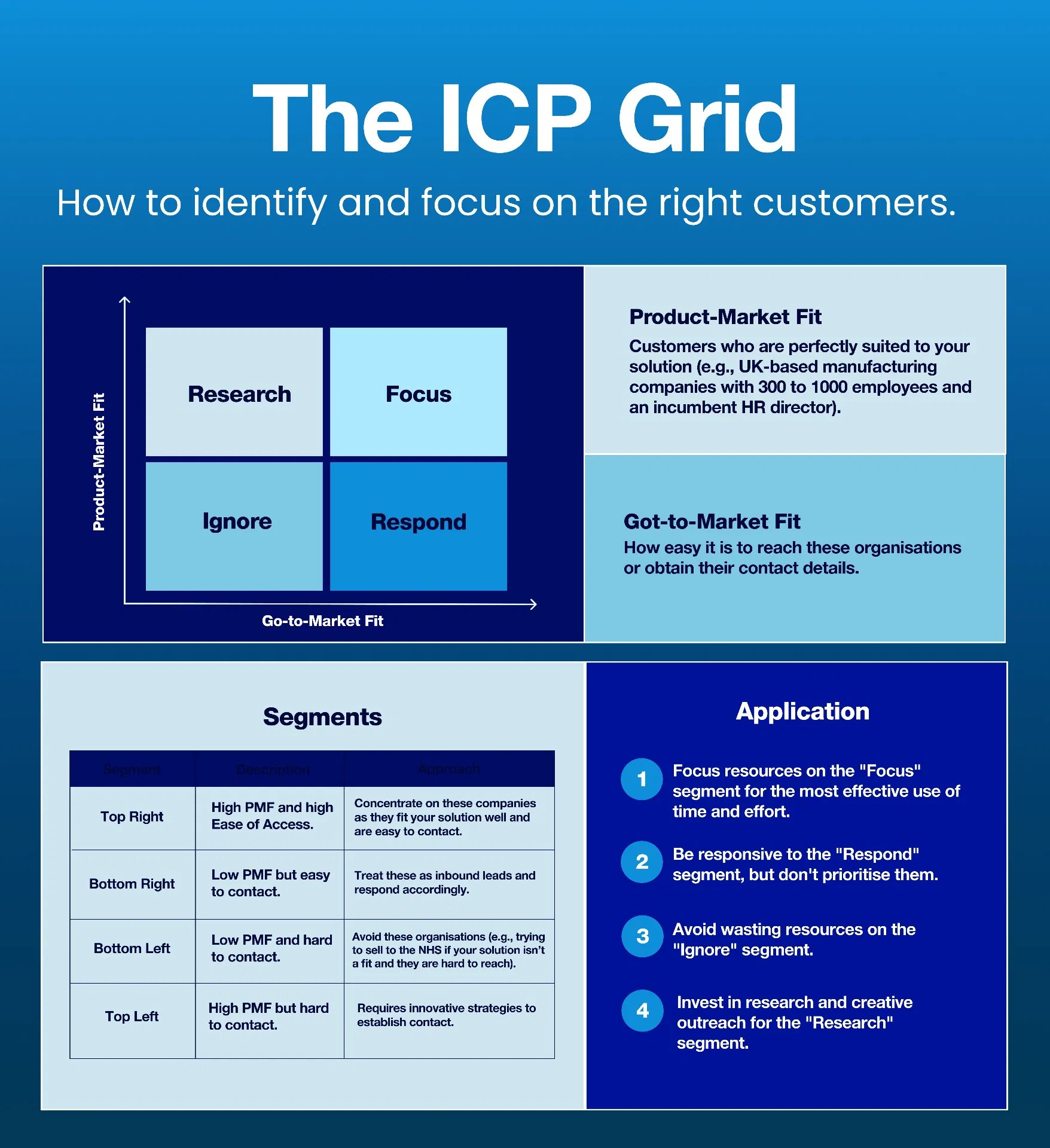
2. Choose the customer, not the largest possible market
“Any mid-sized company with a need for efficiency” is not a useful target, however good it sounds in an investor deck. It is far too broad to guide prospecting, messaging or product decisions, and it is the single most common reason a go to market strategy fails to produce consistent pipeline.
Start with evidence from the customers who buy, get value and stay. Look for patterns in the organisations that move through the buying process with least friction: what do they have in common, what makes the problem important to them right now, and who owns the outcome and the budget? That pattern, not the market size number, tells you where to concentrate.
The Perfect Customer Profile describes the organisation where your software is a strong fit. It helps your team recognise good-fit accounts and distinguish them from companies that may be reachable but are unlikely to buy or succeed, which is the difference between a pipeline that converts and one that quietly rots.
Then identify the Economic Buyer: the person accountable for the business outcome and able to authorise the spend. A user may feel the day-to-day problem. A Champion may advocate for your solution internally. Both can matter. Neither necessarily controls the budget.
If the team cannot agree who the Economic Buyer is, do not settle the argument by picking the most convenient job title. Test the assumption against real deals instead: who signed, who owned the budget, who had to defend the decision in front of their own board? The answer is usually clearer than anyone expects once you look.
Concentration is a commercial choice, not a permanent one, and you can always widen later. First establish where the business has the strongest fit and can learn fastest, because that is where every hour of effort compounds.
3. Lead with Visceral Pains, not product features
Buyers do not rip out working systems because a product has a long feature list. They act when a problem hurts enough to justify the time, budget and organisational effort of changing, and your go-to-market strategy has to be built around that pain rather than around what the product happens to do.
A Visceral Pain is more than an inconvenience. It has a consequence if nothing changes: missed revenue, wasted time, operational risk, pressure on a stretched team or a commitment the buyer has made publicly and cannot now meet. Your message should make that consequence unmistakable, in the buyer’s own language, before you explain what the software does. This is the heart of problem-led messaging, and it is where most SaaS pitches quietly fall apart.
This is also where internal conviction can mislead you badly. A product team may be proud of a feature, sales may hear a particular objection on every call, marketing may see a content opportunity in a trend. Those are useful inputs, but none of them proves that the target buyer sees the problem as urgent. Evidence comes from customer conversations, buying decisions and what happens after implementation, not from how confident everyone feels in the Monday meeting.
Use the decision the buyer actually needs to make as your test. Can they explain why the problem matters now, describe what it costs to leave it unresolved, and connect the proposed change to a business outcome they are accountable for? If they cannot, more product detail will not create urgency no matter how well you present it.
4. Match the GTM motion to how customers buy
A go-to-market strategy is not just positioning and lead generation. It also needs a credible route from the first conversation to a signed decision, and from there to customer value, because a strategy that stops at the website copy has done half the job at best.
The right GTM motion depends on the product, the customer and the buying process. Some buyers can evaluate and adopt software with little assistance; others need discovery, technical validation, security review, procurement and a clear business case before anyone signs. A sales-led, product-led, partner-led or hybrid motion is not automatically right because it happens to be fashionable this year. It has to fit the buying reality your customers actually live in.
Map the steps in a real purchase, ideally one that went well and one that stalled. What criteria did the buyer use, who evaluated the product, who approved the budget, which stakeholders had to be involved, and what did the Economic Buyer need to believe before committing? These are the decision criteria and the decision process, not gaps to fill in with assumptions after a deal has already fallen over.
Give the Champion a useful role, but never confuse support with authority. A Champion can help you understand the organisation and build the internal case, yet the team still needs a route to the Economic Buyer and evidence that the purchase can pass the organisation’s decision process. Deals that lean on a Champion without a buyer relationship are the ones that go quiet in month three.
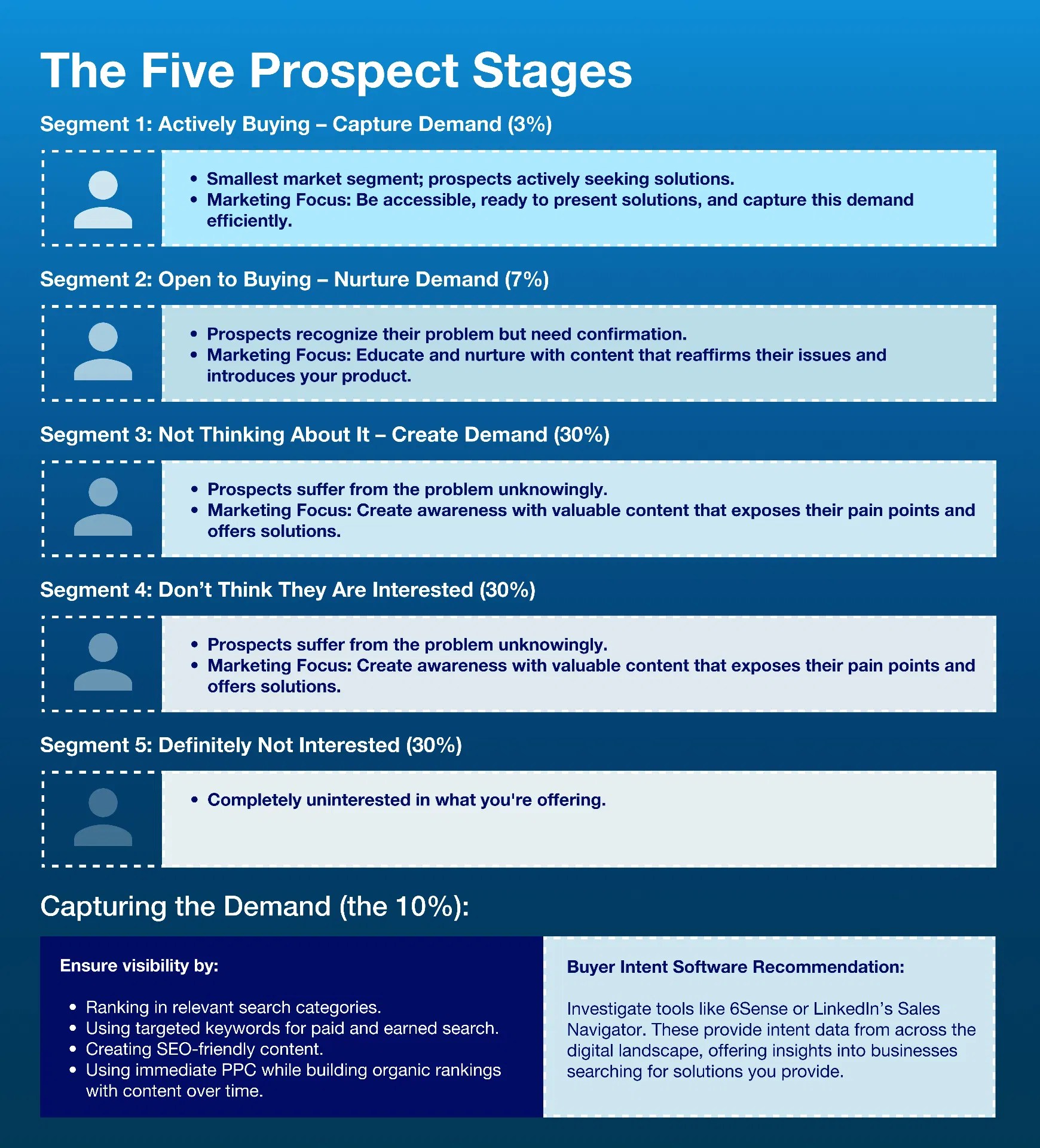
The motion also includes what happens before a buyer is ready to buy anything. Some prospects are actively looking right now, others recognise a problem but are not yet evaluating solutions, and a good number have not connected their symptoms to a problem at all. The five prospect stages are a useful reminder here: one message and one call to action will not suit everyone, and pretending otherwise is how good marketing budgets get wasted on people who were never going to move this quarter.

5. Make the strategy repeatable before you scale it
A promising deal is not yet a repeatable sales motion, however good it felt to win it. Look across more than one customer and ask what stayed consistent: the buyer, the pain, the trigger, the decision path and the reason they chose you over the alternatives.
Repeatability does not mean every deal is identical. It means the team can recognise a strong opportunity, run a credible process and learn something useful from the result either way. When each sale depends on a founder improvising a fresh story in the room, the business may have individual wins but has not yet proved a dependable motion, and that is precisely the point where founders start wondering why SaaS companies miss revenue targets while their own forecast keeps slipping.
The same principle applies to growth models. Product-led growth, enterprise sales and channel selling each ask different things of the product and the team, and copying whichever model a well-known company used says nothing about what will work for yours. The choice should follow evidence about your customers, product and sales process, not a borrowed playbook.
A good go-to-market strategy also connects sales, marketing and product, and this is where sales and marketing misalignment usually gets resolved or quietly ignored. When teams share the same customer and pain definition, marketing can create relevant demand, sales can test the buying case and product can prioritise what matters to the customers most likely to stay. Without that shared view, poor results turn into a blame loop: sales blames lead quality, marketing blames follow-up, product points at missing features, and everyone is technically right about something that does not matter. Examine the system before you examine the individuals in it.
6. Run this diagnostic with your team this week
Write this sentence together, using evidence from customers and sales conversations rather than what everyone hopes is true:
Our software is perfect for [Economic Buyer] in [Perfect Customer Profile] who is struggling with [three Visceral Pains].
Be precise about every bracket. Name the person who can approve the spend, the kind of organisation where your solution genuinely fits, and the problems serious enough that doing nothing becomes difficult to defend. Then test each one. Can you point to customer evidence, can Sales and Marketing give the same answer without a debate breaking out, and do your recent wins support it? If the answer is no, that is the diagnosis, not a reason to fill the gaps with confident guesses.
Use the same test on your motion. Can the team describe how a good-fit prospect becomes a customer, who is involved in the decision and what evidence moves the deal forward? If every opportunity follows a different route, find out why before adding more volume.
We use this exact exercise with founder teams we work alongside, and it has a habit of exposing the honest gaps in a plan within an hour.
What a go-to-market strategy should give you
A good go-to-market strategy should give the business more than a list of things to try. It should provide a clear customer focus, a reason to buy grounded in Visceral Pains, a realistic view of how decisions actually get made and a GTM motion the team can keep improving through evidence. That is what turns a scattergun plan into a strategy, and it is the difference between teams that hit their numbers and teams that keep explaining why they did not.
If you cannot state who buys, where they buy and why they act, you are not ready to scale activity, and no amount of extra prospecting will fix it. Start by writing and testing the sentence above. To work through it with your team, use the free Selling Software Algorithm Builder, and if you want to go deeper on choosing the right customers, our guide to how to find your ideal customer profile covers the groundwork in detail.
And if you want the complete system behind all of this — the dartboard, the ICP Grid, the Launching Customer Sweet Spot and the full Market Map and Face Book exercises — it's all in The Selling Software Algorithm: The Go to Market Navigation System for B2B Software Leaders by Richard Blundell, Paul Watson and Chris Tottman, available on Amazon.
Missing your sales targets?
Tell us what’s not working and we’ll help you find out why.