
You’re losing deals with “too expensive” in the notes, while the internal pricing debate keeps going round in circles. Before changing your price, ask whether the buyer understood why they needed to act. A weak reason to buy is more often the problem than a wrong number.
That doesn’t mean pricing is unimportant. It means pricing is usually downstream of a more basic question: can the buyer see a clear, urgent connection between their problem and your product?
1. Price is often the visible symptom
When a deal stalls, price is easy to point to. It’s concrete, it’s in the proposal, and it gives everyone a neat explanation. The trouble is that “too expensive” can mean several different things: the buyer can’t afford it, the product is in the wrong budget, the value is unclear, or the buyer hasn’t decided the problem is urgent enough to solve.
Those aren’t the same issue, and they don’t have the same remedy. A discount might help with a genuine budget constraint. It won’t make a vague proposition compelling. If buyers can’t tell what problem you solve, cheap can read as risky and expensive can feel unjustified.
Broadly relevant is commercially invisible. Your product might help a lot of businesses, but a buyer needs to recognise their own situation in your message before a price can make sense.
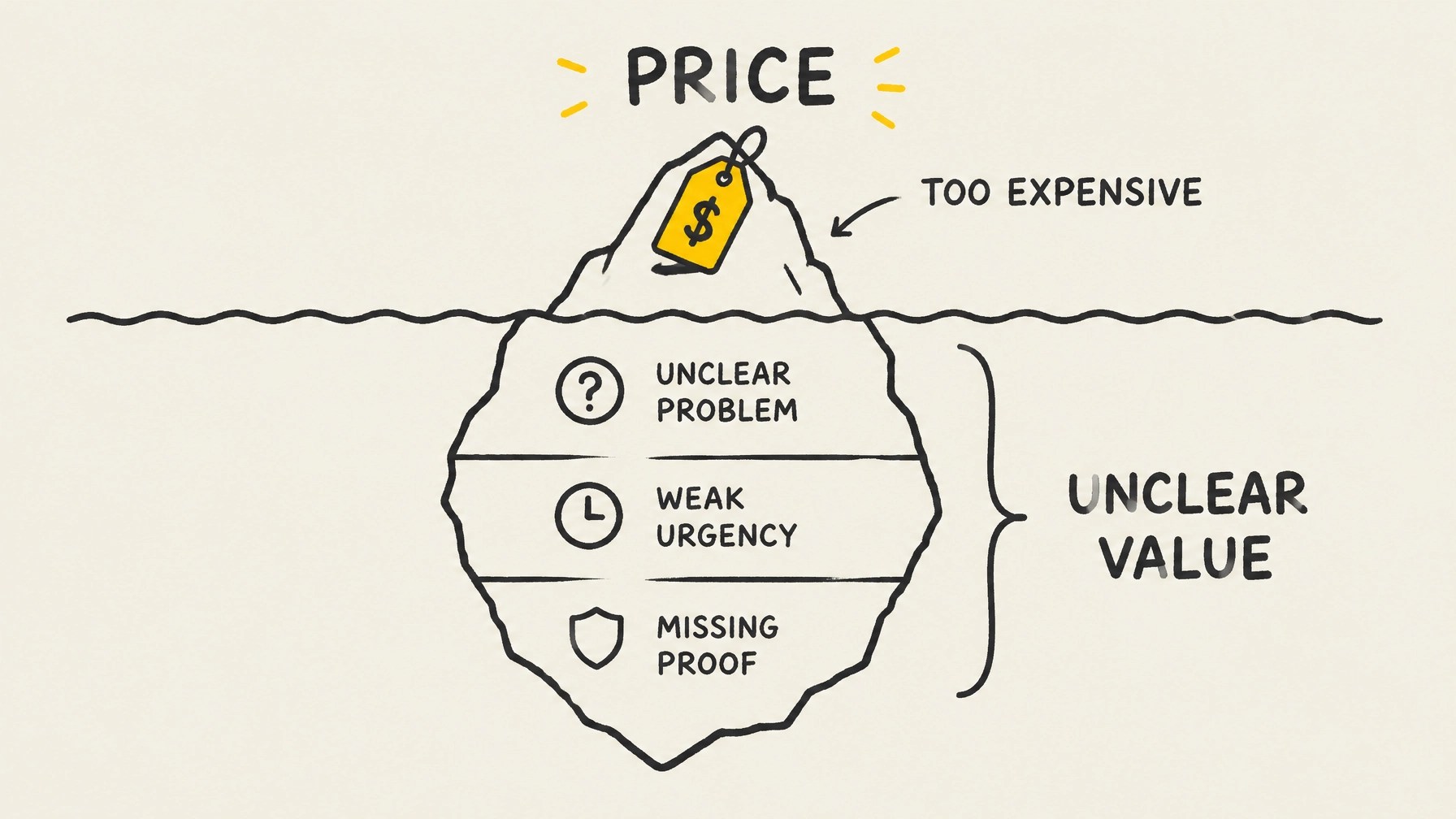
2. Pricing comes after the reason to buy
A useful b2b saas pricing strategy starts with the buyer and the problem, not a competitor spreadsheet or an internal argument about what the product “should” cost.
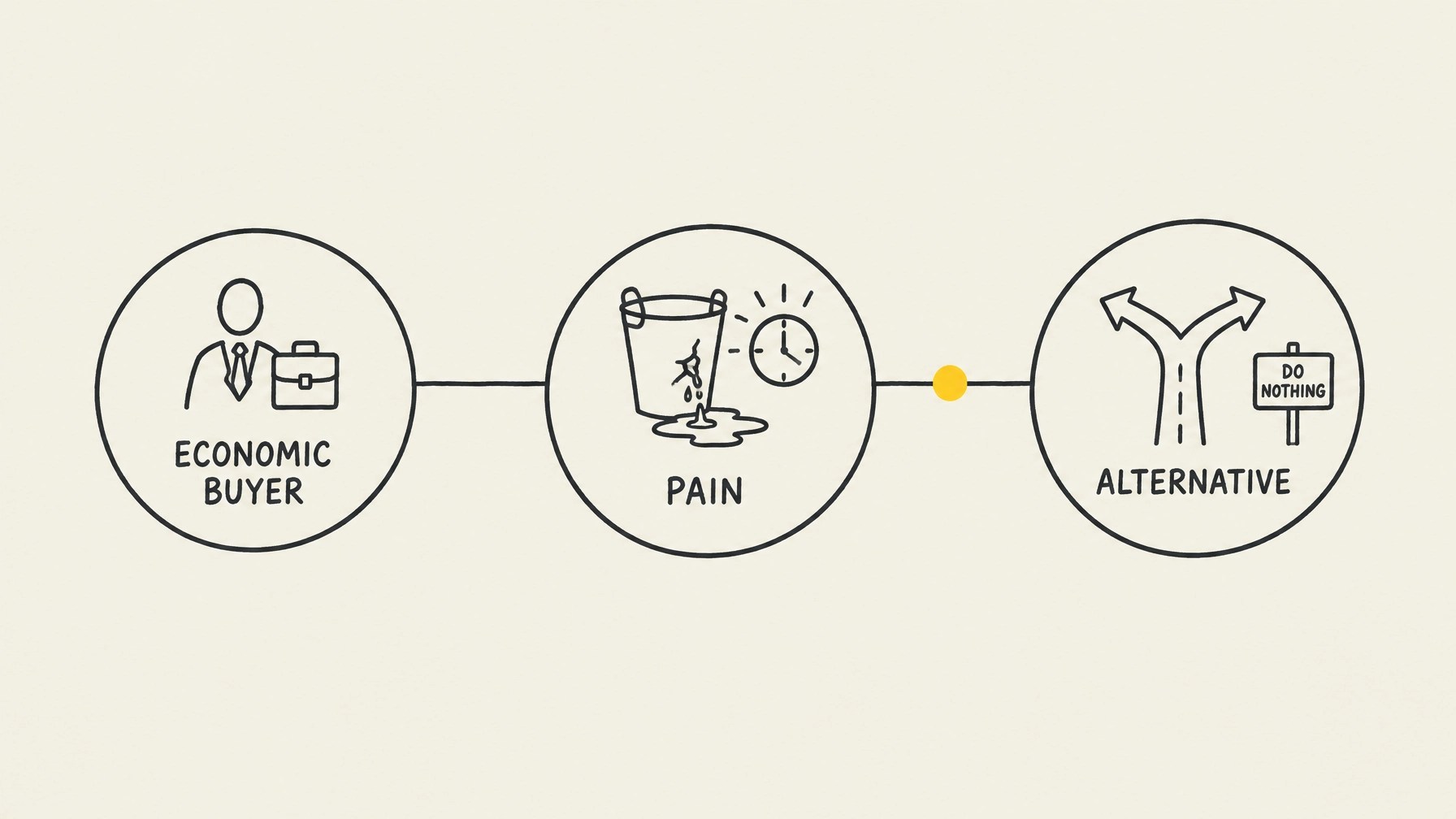
Who is the Economic Buyer? What result are they responsible for? What happens if the problem continues? Those answers help you connect your price to something the buyer already cares about: revenue they’re missing, costs they need to control, risk they have to manage, or work that’s holding the business back.
That’s the difference between presenting a price and making a price defensible. If you can connect the investment to a visceral pain the Economic Buyer is measured on, the conversation becomes about the cost of solving the problem against the cost of leaving it alone.
A SaaS sales strategy that puts features first asks the buyer to do too much of that work themselves. Start with the pain, show why it matters now, and then explain how your product changes the situation.
3. Compare your price with the real alternative
Your competitor’s price isn’t always the most relevant comparison. The buyer may be considering another product, but they may also be weighing an internal workaround, hiring someone, continuing with a manual process or doing nothing.
That last alternative is often the strongest. “Do nothing” may not appear in your competitor analysis, but it’s usually in the buyer’s decision. If the current approach is inconvenient but tolerable, a new line of software spend needs a convincing reason to displace it.
Ask what the problem costs this buyer in time, money, risk or missed opportunity. Most customer pain points b2b saas teams hear about are described in terms of inconvenience rather than cost. Don’t reach for assumptions about what the pain “must” be worth. Look for evidence in customer conversations, lost deals, renewals and the language buyers use when they explain why they acted.
Your Perfect Customer Profile is a useful place to begin. The closer you are to the customers who feel the problem acutely and get value quickly, the easier it is to build a proposition and price that speak to them.
4. Bring up price before the end
Some teams keep pricing out of early conversations because they’re worried a number will frighten buyers away. That can mean everyone spends weeks progressing an opportunity before discovering that the buyer has no budget, the spend belongs to another department, or the expected value doesn’t justify the cost.
You don’t need to open a first meeting with a quote. You do need to understand how the buyer thinks about funding the problem. Ask which budget would cover a solution, who needs to approve it, what else competes for that budget and what evidence the Economic Buyer will need.
This isn’t about qualifying people out as quickly as possible. It’s about finding out whether the problem, value and buying process line up, before the team builds its forecast around an opportunity that was never commercially viable.
It also tests your positioning. When buyers can’t place your product in a budget or explain what it replaces, that may point to an unclear go to market strategy for SaaS, not simply a pricing page that needs a rewrite.
5. Know when pricing really is the issue
There are times when pricing is the problem, and it’s worth being honest about them.
One is packaging. Your product may solve a real, urgent problem, but the available package may not match the buyer’s budget or how they want to purchase. They may need a smaller entry point, a different unit of value, or a clear way to start without committing to capabilities they can’t use yet.
Another is the buying centre. If the person championing your product isn’t the Economic Buyer, the purchase may land in a cost centre with no budget or authority to approve it. The end user can see the value and still be unable to justify the spend to finance. In that case, lowering the price may not fix the problem; you need to understand who owns the budget and what case they need to make.
Pricing can also create needless friction when buyers can’t understand what’s included or predict what they will spend. If a prospect can’t explain how the package fits their needs, investigate packaging and clarity rather than assuming they simply want a discount.
A Market Map and Face Book can help your team identify the people involved in a purchase, rather than treating one interested contact as the whole buying group.
6. Run this diagnostic on your lost deals
This week, review the last ten opportunities marked lost where price was recorded as the reason. For each one, ask:
- Did the buyer clearly describe the problem and its consequences?
- Did the team establish why it needed attention now?
- Was the Economic Buyer involved, and did the spend fit their budget?
- Did the buyer compare your price with a real alternative, including doing nothing?
- Did they say the price itself was unacceptable, or did they disengage before value was established?
Look for the pattern, not a single answer. If the buyer understood the value, had the right budget owner involved and still couldn’t make the numbers work, pricing or packaging may need attention. If the value was never clear, a price change is likely to disguise the problem rather than solve it.
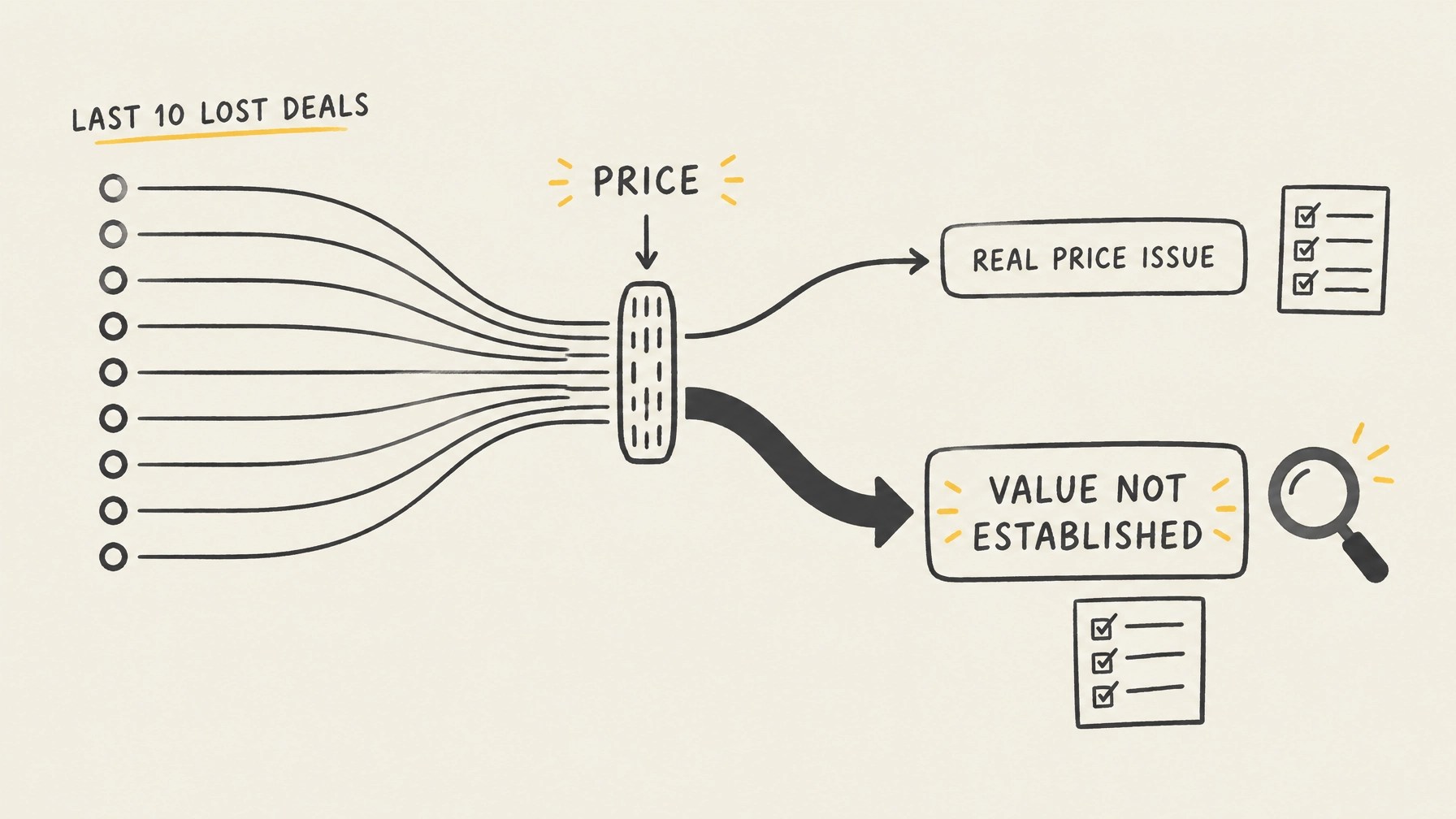
If you’re looking at a sales pipeline not converting, this is a more useful place to start than another round of discounting. It gives you evidence to take back to the team and helps separate a commercial problem from a positioning problem.
Price the value you can prove
Your pricing strategy matters. But it can’t compensate for an unclear customer, an indistinct problem or a sales conversation that reaches the price before it establishes a reason to buy.
Start with the buyer, the pain and the alternative. Then check that your packaging and price make sense to the person who controls the budget. If you want to work through those choices for your business, use the free Selling Software Algorithm Builder.
Missing your sales targets?
Tell us what’s not working and we’ll help you find out why.