
Your pipeline is full of interested people, but the deals keep stalling before approval. If you are a B2B software founder watching why saas companies miss revenue targets play out in your own forecast, the likeliest explanation is a quiet one: the person who loves your product cannot commit the budget, and nobody has taken the trouble to find the person who can.
In B2B software, the Economic Buyer is the person with the authority and accountability to approve the spend. They are rarely the most enthusiastic prospect, not usually the main user, and quite possibly not the one who signs the contract. Confusing those three roles is one of the least-discussed reasons a saas sales strategy produces long, slow, frustrating cycles that never quite close.
1. What is an Economic Buyer?
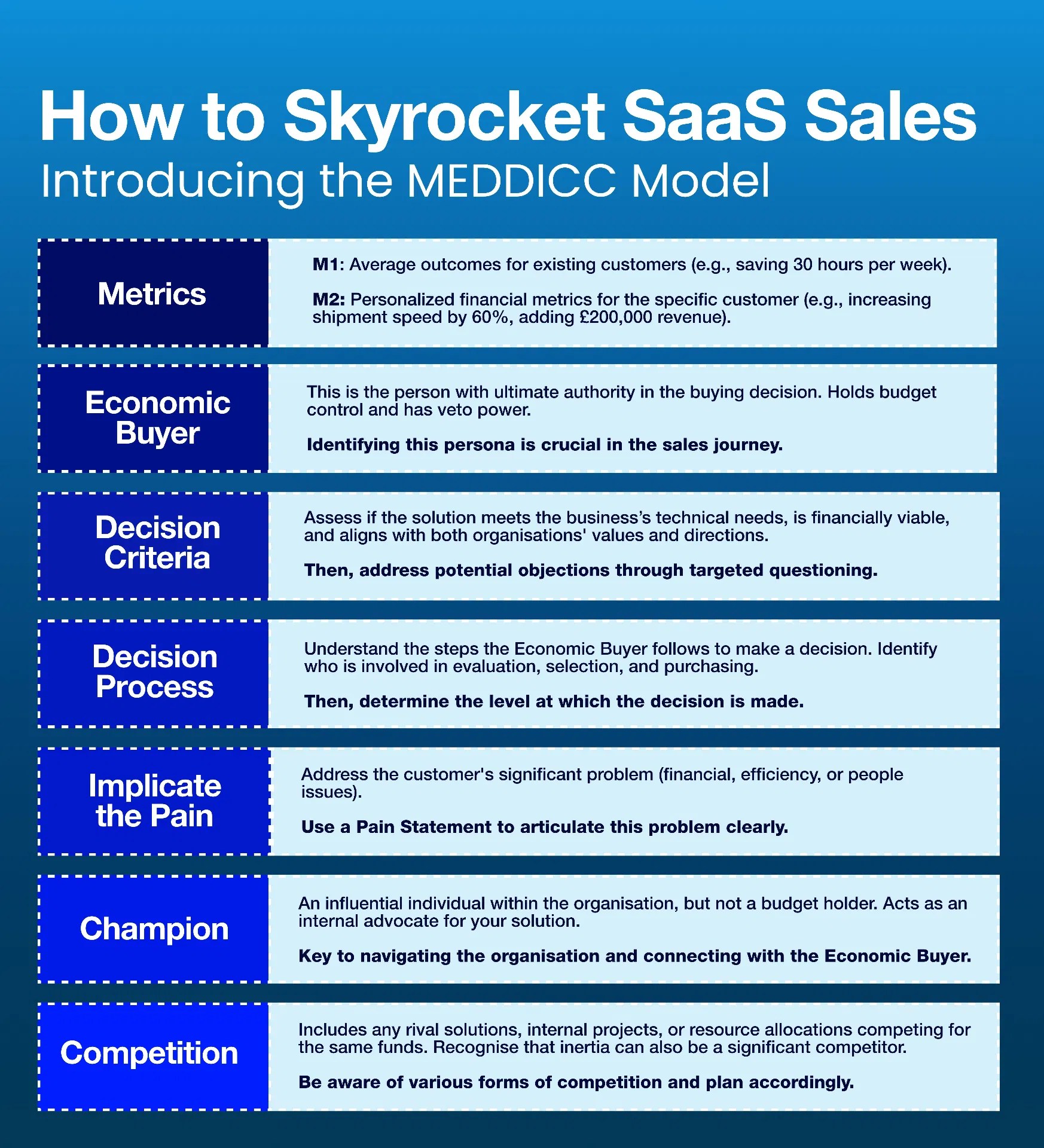
An Economic Buyer is the person who can authorise the investment, carries responsibility for the outcome and has a direct stake in solving the problem. They may own the relevant budget line, or they may have access to discretionary funds that never appear on any procurement schedule. Either way, they can move the purchase forward or stop it dead, and they know which of those two things they intend to do from the moment you leave the room.
That is the useful answer to the question every B2B seller eventually asks: who actually signs the cheque? The Economic Buyer is the person who approves the spend in the business sense, which is not quite the same thing as the person who countersigns the paperwork. The authorised signer might sit in procurement, legal or finance, and in plenty of companies those roles overlap in ways nobody documents. Do not assume they do.
Job title is only ever a clue. Depending on the problem you solve and the shape of the organisation, the Economic Buyer could be a CFO, a COO, a CTO, the CEO or a functional leader three levels down who happens to own the pain. What matters is not the title but three questions: can this person approve the investment, do they carry accountability for the result, and do they care enough about the problem to act on it this quarter rather than next year?
2. Don’t mistake a Champion for the buyer
A Champion is an internal advocate, and a good one is worth cherishing. They understand the problem, they can see the value in your software, and they are willing to spend political capital helping you make the case. They introduce you to colleagues, explain how decisions actually get made rather than how the org chart says they do, and help you find your way through the organisation.
That support matters enormously, but it has a hard limit: a Champion may carry influence without carrying budget sign-off. If they cannot approve the spend themselves, and cannot get you a conversation with someone who can, then the whole deal rests on them persuading others in the gaps around their day job.
That is a fragile position for any deal to sit in, and it is not a criticism of the Champion, who is doing exactly what you asked of them. It is a gap in your sales process, and gaps like that are why your sales pipeline is not converting at the rate the demos deserve.
3. The Economic Buyer is not just a title
A common mistake in economic buyer SaaS discussions is to treat the role as a box to tick in the CRM. “CFO identified” is not the same thing as understanding the person who will make the decision, and it never will be.
The Economic Buyer is a human being with pressure, ambition and personal stakes riding on the outcome. The business problem matters to them because of what it does to their objectives, their reputation, their team and their ability to deliver what they promised the board. The most urgent pain is often not the feature gap on a product comparison sheet at all, but the issue they find themselves thinking about when the office goes quiet: the three-in-the-morning, stare-at-the-ceiling problem.
That does not mean you get to make assumptions about their personal life, or sell on emotion alone. It means you connect the business case to a consequence they are personally accountable for. “We save time” is vague and instantly forgettable. “The current handover process is causing missed service commitments, and you are the one accountable for getting reliability back on track” gives the conversation an actual decision to resolve.
This is why customer pain has to come before product features, every single time. A demo can show what your software does, but it cannot, by itself, make the problem urgent to the person who approves the investment, and urgency is the thing you are really selling.
4. Why selling to the wrong person stretches the sales cycle
When your team sells only to a user or a Champion, they can easily mistake activity for progress. You run more demos, answer more questions, revise the proposal again and again, and every one of those things feels like momentum. Meanwhile the business case sits gathering dust, still waiting for someone with the authority to actually decide.
That gap has a nasty habit of appearing late, usually at the worst possible moment. The prospect tells you the team is keen, then mentions budget approval, executive sign-off or a procurement process nobody has bothered to map. The opportunity can look perfectly healthy in the pipeline for months while the real decision-maker has never once discussed the problem, the outcome or the cost of doing nothing. If your sales cycle is too long, this is one of the first places to look.
Whenever a pattern like this shows up, it almost always traces back to one of three things: the wrong customer, the wrong message or the wrong motion. Perhaps you are working with a company that lacks a pressing need, which is a customer problem. Perhaps your message speaks fluently to users but says nothing to the person accountable for the outcome, which is a messaging problem. Or perhaps your sales motion never builds a route from the Champion to the Economic Buyer at all, which is a process problem. The good news is that all three are fixable, and knowing which one you have is most of the battle.
A sound B2B sales strategy does not mean bypassing the Champion, and anyone who tells you to go around your advocate is handing you a shortcut to a dead deal. It means equipping the Champion to bring the Economic Buyer into a useful conversation, one where the business case and the accountability sit in the same room.
5. How to identify the real buyer
Start with the problem, then follow the money and the accountability, because they rarely sit in the same chair. Ask questions that help the prospect explain, in their own words, how their organisation will actually make the decision:
- “If you decide to solve this, whose budget would fund it?”
- “Who is accountable for the result this project is meant to improve?”
- “Who needs to approve the investment, and who is authorised to sign the agreement?”
- “What happens if the business does not address this problem this year?”
The answers help you distinguish the Economic Buyer from the budget owner, the Champion and the signer, which are four different jobs that different companies fill in very different ways. In some organisations one person fills several of those roles at once. In others, approval is shared or subject to spending thresholds that quietly add a fortnight to every decision. Map the real process instead of leaning on assumptions, because assumptions are what got you here. And if you are not yet sure which companies even have such a person sitting in them, a Market Map Face Book keeps the hunt focused on the organisations where the real buyer actually works.
Whatever you do, do not turn the first meeting with a senior buyer into a feature tour. Use it to understand the problem, what it costs the business to leave it unresolved, what a successful outcome looks like to them personally, and how the decision will be made. Show the product only once you know what the buyer needs to believe before they can say yes.
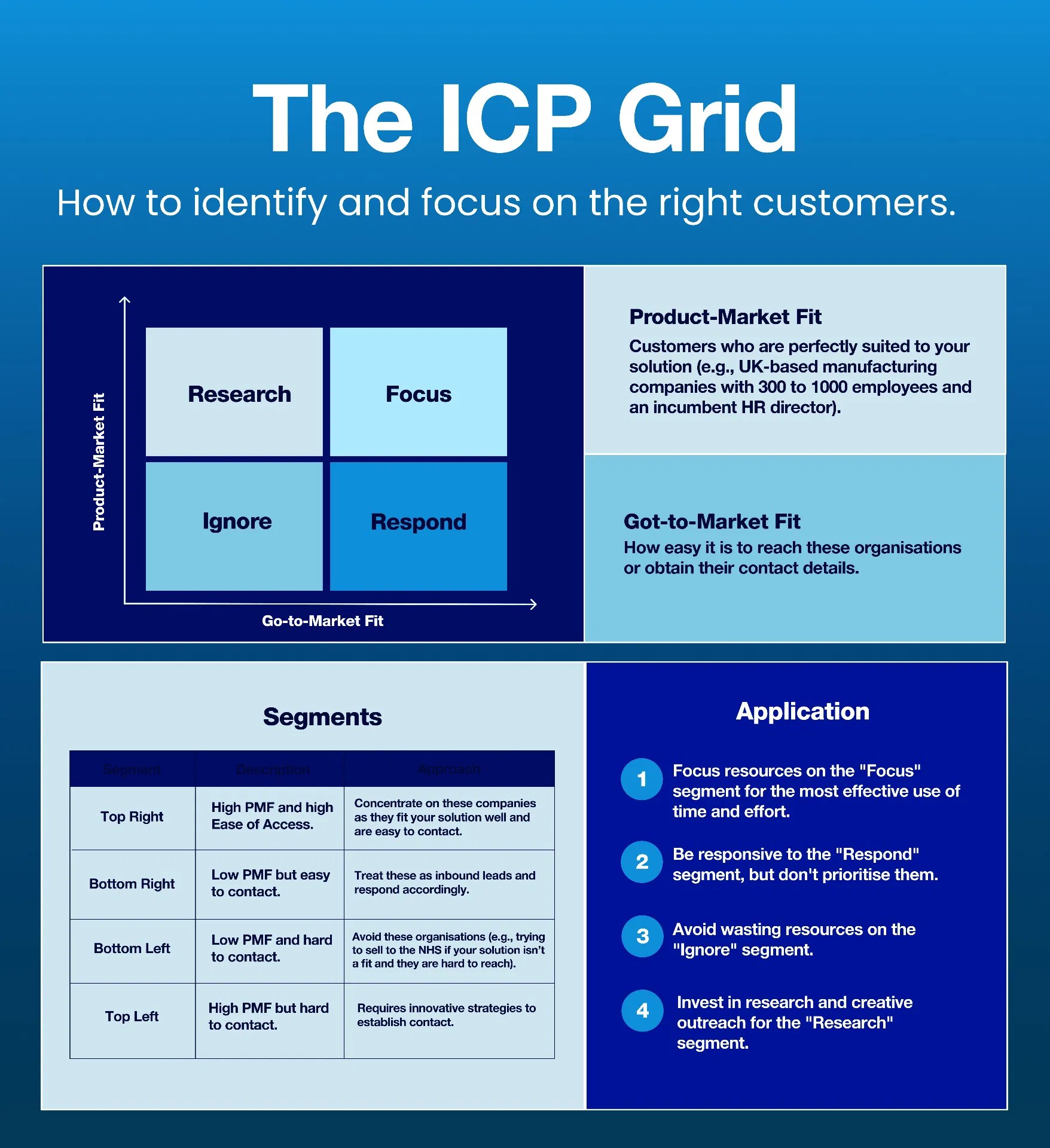
A saas growth plateau often has the same root: the company keeps selling to keen users inside companies where the buying decision belongs to someone who has never been engaged. The Economic Buyer should also fit your Perfect Customer, because a buyer with authority is not enough if the problem is not important to them. Your strongest reason to buy is what happens when you bring the Economic Buyer, the Perfect Customer and their Visceral Pains together into a single, precise description of who you serve and why they act. If you have not yet worked out who that person is for your business, it is worth reading how to uncover perfect customers for your software before you spend another quarter chasing the wrong audience, and which customers to focus your efforts on when you go to market shows you how to concentrate that focus once you have.
6. Run this diagnostic this week
Take your last five lost or stalled deals and, for each one, write down the person named in the proposal, whether they could actually approve the spend, and whether they were accountable for the problem you were solving. It takes twenty minutes and it is one of the most revealing exercises you can run on a Sunday afternoon with a coffee.
If the proposal went to someone without budget authority or accountability, mark the deal for review, because you were never really in a deal at all. Then turn to the opportunities still sitting in the stalled pile and ask the harder question: has the Economic Buyer heard the case directly from you, or is your Champion out there carrying the whole argument alone, unpaid for the privilege?
Run a second check with Sales and Marketing separately, and here is where you find out how healthy the business really is. Ask each team to name the Economic Buyer for your target customer and describe the business problem that person is accountable for, then compare the answers side by side. If they differ, you do not have a reason to blame one team, you have a shared understanding problem, which is the honest diagnosis in most cases of sales and marketing misalignment. It also usually means the buyer, the message and the sales motion were never aligned to begin with.
This is a practical way to find out whether your sales cycle is too long because of a genuine buying process, or because your team has simply never reached the person who can make the decision. Those are very different problems, and they need very different fixes.
Find the person behind the approval
Any saas sales strategy that treats the Economic Buyer as simply the most senior person in the room will cost you deals, because seniority and authority overlap far less neatly than the org chart suggests. They are the person who can authorise the investment and who has a genuine, personal reason to care about the outcome. Identify them early, understand the pressure they are under, and give your Champion a clear path to bring them into the conversation before the quarter disappears.
If your pipeline is not converting and the cycles keep stretching, this is usually the point at which it is worth getting an outside pair of eyes on the whole motion. For a practical way to define your Economic Buyer, Perfect Customer and Visceral Pains, use the free Selling Software Algorithm Builder.
And if you want the complete system behind all of this — the Economic Buyer, Perfect Customer Profiling, the ICP Grid and the whole go to market navigation method — it's all in The Selling Software Algorithm: The Go to Market Navigation System for B2B Software Leaders by Richard Blundell, Paul Watson and Chris Tottman, available on Amazon.
Missing your sales targets?
Tell us what’s not working and we’ll help you find out why.