
A forecast review ends with four explanations for the same missed target. Sales says the leads aren’t qualified. Marketing says sales isn’t following up. Product says the roadmap is being pulled in too many directions. The founder asks for better alignment, and everyone leaves with another meeting to attend.
The problem usually isn’t personality. It’s that each team is working from a different version of the truth: a different buyer, a different problem and different evidence about why deals are won or lost.
Sales and marketing alignment won’t last if the shared inputs are still in dispute. Before you add another process, agree on who you’re selling to, what they need to fix and what the evidence says about the deals you’re pursuing.
The blame loop is a symptom
The loop is familiar: founders blame sales, sales blame marketing, marketing blame product, and product blames the roadmap or the market. Each team may have a reasonable explanation from its own vantage point. That doesn’t mean any one explanation is the root cause.
A company’s value proposition can become woolly over time. Product sees the sophistication of the solution; marketing sees the story it can take to market; sales sees what buyers respond to in a conversation. When those views aren’t brought together, the website, sales collateral and customer conversations begin telling different stories.
It’s tempting to treat that as a communications problem between departments. Often it’s a definition and evidence problem underneath. Teams don’t agree on the buyer, the pain that matters or what counts as a useful signal from the market.
There are only three suspects: the wrong customer, the wrong message or the wrong motion. More meetings won’t identify which one is responsible. Shared inputs can.
1. Agree on the Perfect Customer and Economic Buyer
“Mid-market SaaS companies” may be a useful starting point, but it’s not precise enough to guide a sales conversation or a marketing campaign. The Perfect Customer is the kind of business that gets meaningful value from the solution, can buy it, and is likely to act on the problem it solves.
Inside that business, identify the Economic Buyer: the person with the authority and commercial reason to approve the purchase. The user, champion and Economic Buyer may be different people. If marketing builds campaigns for one and sales qualifies another without understanding the connection, the handover can create friction rather than momentum.
Get specific about the conditions that make a customer a good fit. What has changed in their business? What are they trying to achieve? Who feels the cost of the current situation, and who can fund a change? Use evidence from actual customers and deals, not an internal preference for the biggest possible market.
If your team needs a practical way to define this, start with a working method for uncovering your Perfect Customers. The point isn’t to rule out every other buyer forever. It’s to focus long enough to learn what repeats.
2. Put the problem before the product
Once you know who you’re trying to serve, agree on the problem they urgently need to solve. The product may have a long list of capabilities. The buyer needs a reason to change.
A useful Pain Statement makes the connection clear: who feels the pain, what it costs them, and why they need to act. It gives sales, marketing and product a shared starting point. Product can understand which needs matter most; marketing can speak to the consequences; sales can test whether those Visceral Pains are present in a real conversation.
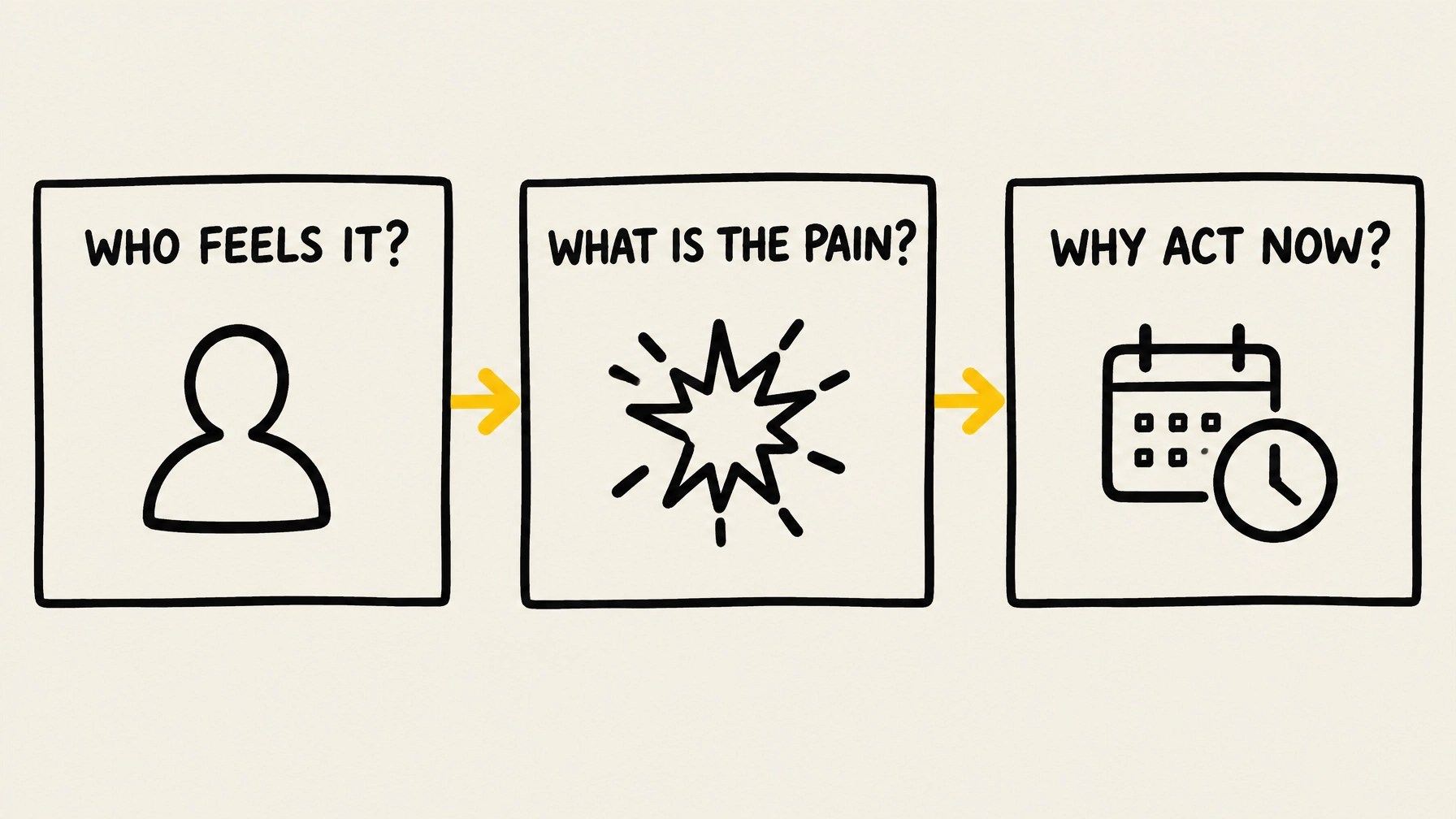
Build the statement with the people closest to the evidence: customer-facing colleagues, product and leadership. Write it down where the team can use it. Then check whether the website, sales deck and market-facing content describe the same buyer problem. If they don’t, the gap is visible and discussable, rather than left to individual teams to interpret.
This is where positioning and messaging need to work together. A product feature can support the story, but it isn’t the story. Customer pain comes first.
3. Create one shared record of why deals are won and lost
The third shared asset is a record of what the market is telling you. Not a list of labels chosen at the end of a deal, but a usable account of what happened: who was involved, what problem they were trying to solve, what made them act or hesitate, and why the decision went the way it did.
“Price” or “timing” might be the answer a buyer gives. They may be true, but they don’t always explain what shaped the decision. Perhaps the Economic Buyer didn’t see enough value. Perhaps the business didn’t regard the problem as urgent. Perhaps the sales process involved the wrong people, or the promise in the first conversation didn’t match what the buyer later saw.
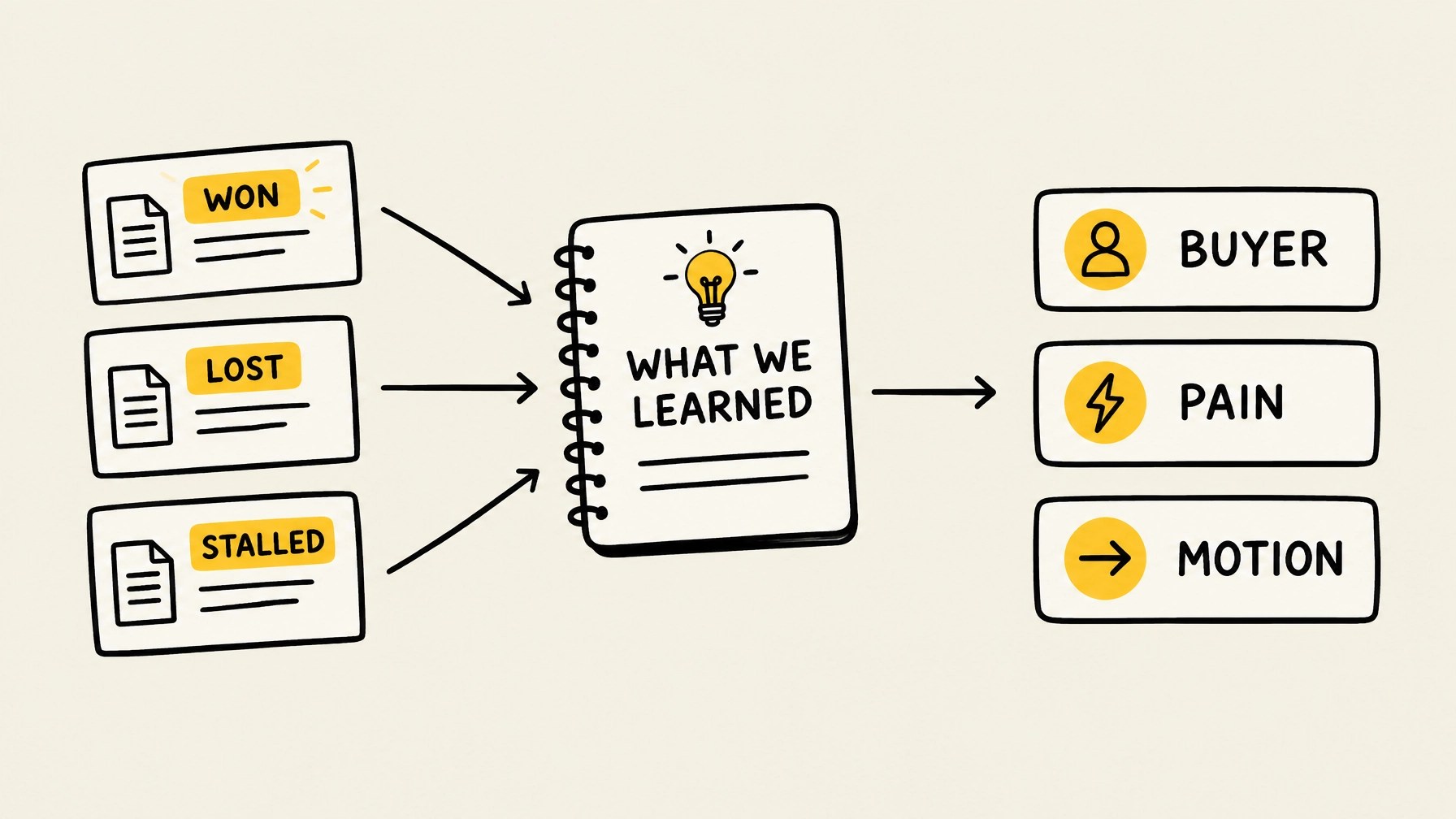
Review a small number of real deals together. Compare the original assumptions with what buyers actually said and did. Record the reasons consistently enough to spot patterns, then use those patterns to adjust targeting, messaging or the sales motion. The goal isn’t a perfect database. It’s evidence that both sales and marketing can use, and that product and leadership can learn from.
When your pipeline isn’t converting, the visible drop-off may not be the true cause. A closer look at what a GTM diagnostic would examine can help distinguish a customer-fit problem from a messaging or sales-process problem.
Run this diagnostic this week
Ask someone in sales and someone in marketing to answer these three questions separately, in one sentence each:
- Who is the buyer we should prioritise?
- What problem are they buying relief from?
- Why were the last three deals we lost lost?
Then put the answers side by side. Don’t reconcile them in advance. Look for the differences.
If one team names the user and the other names the Economic Buyer, you have a buyer-definition gap. If they name different problems, your message is likely to vary by channel or conversation. If the loss reasons are guesses, rather than evidence from the buyer or deal, the team has no shared basis for deciding what to fix.
That exercise won’t solve every GTM issue in an afternoon. It will show you whether the teams are disagreeing about execution or starting from different assumptions.
What a real fix looks like
Hiring a sales enablement person won’t fix a disagreement about who the Perfect Customer is. A team-building session won’t establish which buyer problem matters enough to prompt action. And another dashboard won’t help if departments interpret its numbers using different definitions.
The leadership team has to make shared decisions about the buyer, the problem and the evidence. It also has to put those decisions to work across the website, campaign planning, qualification, sales conversations and product priorities. Alignment then becomes a result of having the same inputs, rather than something leaders have to keep demanding.
That can be hard to do from inside the business. Founders and functional leaders have built up strong views, and each team sees only part of the customer journey. You can’t operate on yourself. An outside, objective diagnosis can help separate evidence from internal conviction, find where the story or sales motion breaks down, and give the team a practical basis for fixing it together.
A useful next step is to compare your three answers with the people responsible for growth, then map where they diverge. If you want a structured starting point, use the free Selling Software Algorithm Builder.
Missing your sales targets?
Tell us what’s not working and we’ll help you find out why.